
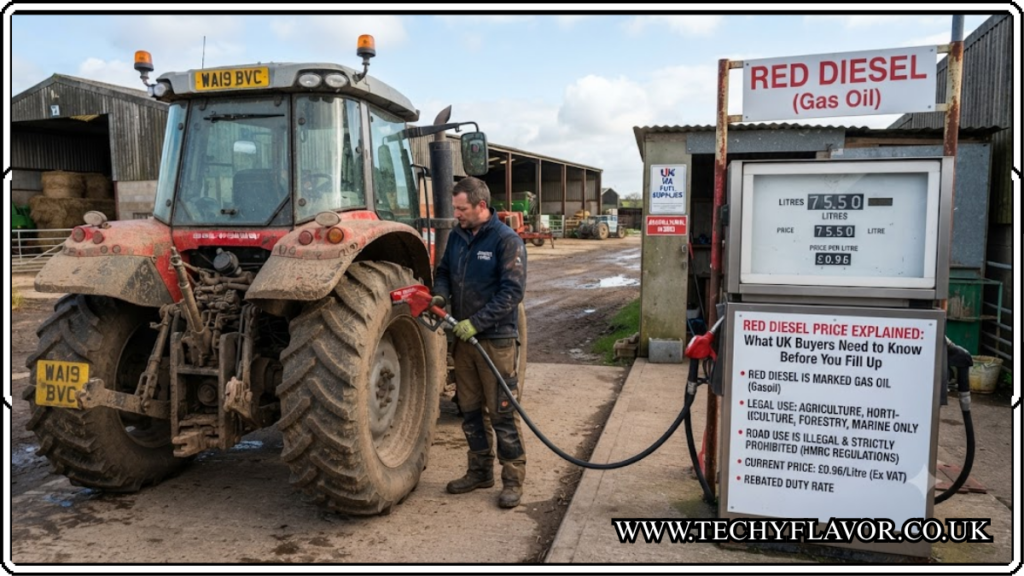

If you rely on agricultural machinery, construction equipment or commercial generators, keeping an eye on the red diesel price can make a noticeable difference to your operating costs. Even small price changes add up quickly when you’re buying fuel in bulk.
Over the past few years, the UK has seen significant changes affecting who can legally use red diesel, how it’s taxed and why prices fluctuate. Whether you’re a farmer, forestry contractor, marina operator or business owner still eligible to purchase it, understanding what influences the red diesel price helps you budget more effectively and avoid unexpected costs.
This guide explains everything you need to know, from the factors that affect pricing to legal regulations, buying tips and ways to reduce fuel expenses.
What Is Red Diesel?
Red diesel is standard diesel fuel that contains a red dye and chemical markers. The dye makes it easy for HM Revenue & Customs (HMRC) to identify rebated fuel during inspections.
The fuel itself performs almost identically to regular road diesel. The major difference lies in taxation. Because red diesel carries a reduced fuel duty, it is considerably cheaper than standard white diesel for eligible users.
Since April 2022, however, many industries have lost the right to use rebated fuel, making it more important than ever to understand current eligibility rules before purchasing.
Key Takeaways
- Red diesel price is lower than standard road diesel because of reduced fuel duty.
- Only specific industries and businesses remain eligible to use red diesel.
- Prices change due to crude oil costs, wholesale fuel markets, taxation and supplier margins.
- Buying larger quantities often reduces the price per litre.
- Storage, delivery location and seasonal demand also affect pricing.
- Using red diesel illegally can result in substantial fines and vehicle seizure.
- Monitoring market trends helps businesses purchase fuel at better prices.
Who Can Still Use Red Diesel in the UK?
Following government tax reforms, only certain sectors can legally use red diesel.
These include:
- Agriculture
- Horticulture
- Forestry
- Fish farming
- Rail transport
- Certain commercial heating systems
- Inland waterways in approved circumstances
- Non-commercial power generation in qualifying situations
If your business no longer qualifies, you must switch to fully taxed white diesel for eligible vehicles and machinery.
Always check current HMRC guidance before purchasing red diesel.
Why Is the Red Diesel Price Lower?
The lower red diesel price mainly comes down to taxation.
Unlike standard road diesel, red diesel benefits from a significant fuel duty rebate because it is intended for off-road use in approved industries. This government support helps sectors like farming and forestry manage operating costs.
Without this tax relief, the price difference between red and white diesel would be minimal.
What Affects the Red Diesel Price?
Several market factors influence the red diesel price throughout the year.
Global Crude Oil Prices
The biggest influence is the international oil market.
When crude oil becomes more expensive due to geopolitical tensions, production cuts or rising global demand, wholesale diesel prices generally increase.
Likewise, falling crude prices usually bring lower fuel costs.
Exchange Rates
The UK imports a significant proportion of its fuel.
If the pound weakens against the US dollar, imported fuel becomes more expensive because oil is traded internationally in dollars.
Fuel Duty and VAT
Government taxation remains one of the largest pricing components.
Although red diesel enjoys reduced fuel duty, VAT still applies and contributes to the final price paid by customers.
Future tax policy changes can quickly alter overall costs.
Distribution Costs
Transporting fuel across the country isn’t free.
Delivery charges depend on:
- Distance from the supplier
- Delivery volume
- Fuel tanker availability
- Rural versus urban locations
Businesses in remote parts of Scotland, Wales or Northern Ireland may pay slightly higher prices.
Seasonal Demand
Demand often rises during busy agricultural periods.
For example:
- Spring planting
- Summer harvesting
- Forestry operations
- Winter heating requirements
Higher demand sometimes pushes the red diesel price upwards temporarily.
How Much Does Red Diesel Usually Cost?
There is no single national price.
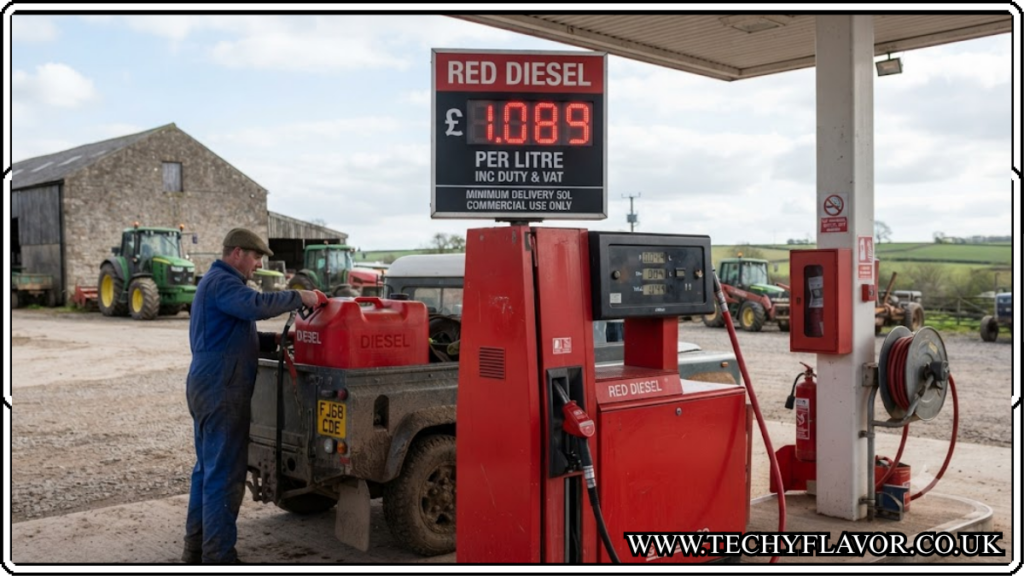
The red diesel price changes daily depending on wholesale markets and local suppliers.
Typical pricing depends on:
- Quantity ordered
- Delivery location
- Supplier competition
- Current oil markets
- Government taxation
Bulk orders usually achieve a lower cost per litre than smaller deliveries.
Buying Red Diesel in Bulk
Many businesses reduce costs by purchasing larger quantities.
Advantages include:
Lower Cost Per Litre
Suppliers frequently offer discounted rates for higher-volume purchases.
Fewer Deliveries
Buying once instead of multiple smaller deliveries reduces transport expenses.
Better Budget Planning
Purchasing when prices are favourable allows businesses to lock in lower operating costs.
However, bulk purchasing requires suitable storage facilities that comply with UK environmental regulations.
Safe Storage Matters
Proper fuel storage protects both your investment and the environment.
Good storage practices include:
- Using approved fuel tanks
- Preventing water contamination
- Keeping tanks secure against theft
- Inspecting tanks regularly
- Maintaining accurate fuel records
Contaminated diesel can damage engines and reduce machinery performance.
Can Anyone Buy Red Diesel?
No.
The red diesel price may look attractive, but only authorised users may legally purchase and use it.
Suppliers normally ask customers to confirm their eligibility before completing an order.
Providing false information can lead to serious legal consequences.
What Happens If You Use Red Diesel Illegally?
HMRC carries out regular roadside and workplace inspections.
If illegal use is discovered, consequences may include:
- Large financial penalties
- Repayment of unpaid fuel duty
- Vehicle seizure
- Criminal investigation
- Damage to business reputation
Because the red dye remains detectable even after attempts to remove it, illegal use is relatively easy to identify.
How Businesses Can Reduce Fuel Costs
Even when the red diesel price rises, businesses can still lower overall fuel spending.
Plan Fuel Purchases
Monitor fuel markets and buy before seasonal demand increases.
Maintain Machinery
Well-maintained engines consume less fuel and produce better performance.
Reduce Idling
Leaving machinery running unnecessarily wastes fuel every day.
Train Operators
Efficient driving and machine operation reduce consumption significantly over time.
Compare Multiple Suppliers
Prices vary between distributors, making it worthwhile requesting several quotations before placing an order.
Choosing a Reliable Fuel Supplier
Price matters, but it shouldn’t be the only deciding factor.
Look for suppliers that offer:
- Transparent pricing
- Reliable delivery schedules
- High-quality fuel
- Emergency delivery services
- Flexible payment options
- Excellent customer support
A dependable supplier can help minimise operational disruption during busy seasons.
Understanding Price Trends
The red diesel price rarely stays the same for long.
Keeping track of market trends helps businesses make smarter purchasing decisions.
Useful indicators include:
- Crude oil market movements
- OPEC production announcements
- UK inflation
- Exchange rates
- Seasonal farming demand
- Weather events affecting fuel distribution
Monitoring these factors provides valuable insight into likely future price changes.
Is Red Diesel the Same Quality as White Diesel?
Yes.
Many people assume red diesel is lower quality because it costs less.
In reality, the fuel quality is broadly similar. The primary distinction is the red dye and the reduced fuel duty.
Modern red diesel also contains additives that help protect engines and improve storage stability.
Environmental Considerations
The UK government continues encouraging businesses to reduce carbon emissions.
Many organisations are exploring alternatives such as:
- Electric machinery
- Hydrotreated Vegetable Oil (HVO)
- Biodiesel blends
- Hybrid equipment
- Renewable energy solutions
Although red diesel price remains attractive for eligible industries, environmental policies may continue shaping the fuel market in coming years.
Tips Before Buying Red Diesel
Before placing an order, ask yourself:
- Am I legally entitled to use red diesel?
- Have I compared several suppliers?
- Is now a good time based on market prices?
- Do I have enough safe storage?
- Can buying in bulk reduce costs?
- Have I checked delivery charges?
Answering these questions helps ensure you’re getting the best value while remaining compliant with UK regulations.
Conclusion
The red diesel price remains an important consideration for farmers, forestry operators and other eligible UK industries that depend on off-road machinery. While it continues to offer substantial savings over standard road diesel thanks to reduced fuel duty, prices still fluctuate with global oil markets, exchange rates, seasonal demand and distribution costs.
Understanding how pricing works allows businesses to make informed purchasing decisions, budget more accurately and avoid unnecessary expenses. By monitoring market trends, buying from trusted suppliers, storing fuel correctly and ensuring legal compliance, you can maximise the value of every litre while keeping your operation running efficiently.
FAQ
What is the average red diesel price in the UK?
There isn’t a fixed national price. The red diesel price changes daily based on wholesale fuel costs, supplier pricing, delivery location and order size.
Why is red diesel cheaper than normal diesel?
Because it benefits from reduced fuel duty. The lower tax makes eligible off-road users pay significantly less than motorists using standard road diesel.
Can private motorists use red diesel?
No. Private road vehicles cannot legally use red diesel. Doing so can lead to heavy fines, unpaid duty charges and vehicle seizure.
Does red diesel damage engines?
No. Red diesel does not damage engines when used in suitable machinery. It is essentially standard diesel with added red dye and chemical markers.
How can I get the best red diesel price?
Compare suppliers, buy larger quantities when practical, monitor fuel market trends and order before periods of high seasonal demand.
Read More Blog: