
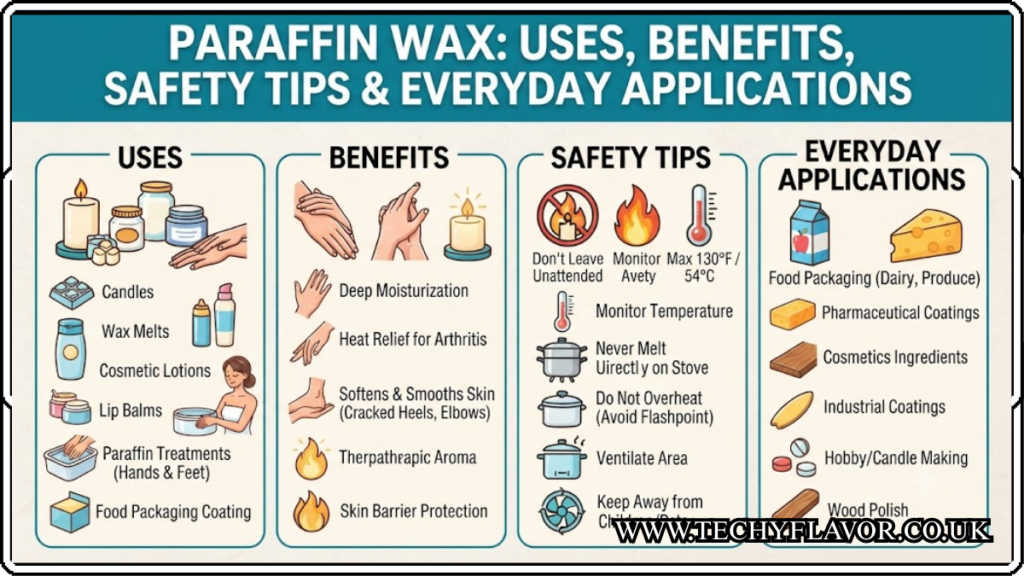

Paraffin wax is one of the most versatile materials used across homes, industries, beauty treatments, food packaging, and manufacturing. Whether you’ve lit a scented candle, enjoyed a spa hand treatment, or protected tools from rust, you’ve probably benefited from paraffin wax without even realising it.
This guide explains everything you need to know about paraffin wax, from how it’s made and where it’s used to its advantages, safety considerations, and environmental impact. If you’re wondering whether paraffin wax is right for your needs, you’ll find practical answers and expert insights throughout this article.
Key Takeaways
- Paraffin wax is a colourless, odourless petroleum-derived wax used in countless everyday products.
- It is commonly found in candles, cosmetics, food packaging, waterproof coatings, and industrial applications.
- Heated paraffin wax is widely used in beauty salons and therapeutic treatments for dry skin and stiff joints.
- Different grades of paraffin wax are designed for different purposes, including food-grade and fully refined varieties.
- Safe handling is important because overheated wax can become a fire hazard.
- Choosing the right type depends on your intended application and quality requirements.
What Is Paraffin Wax?
Paraffin wax is a soft, white or colourless wax created during the refining of crude oil. It consists mainly of saturated hydrocarbons and is valued for its stability, water resistance, and ability to retain heat.
Once refined, the wax becomes suitable for a wide variety of commercial and domestic uses. Depending on the refining process, it may appear as slabs, pellets, granules, or blocks.
Its popularity comes from several practical qualities:
- Excellent heat retention
- Low chemical reactivity
- Moisture resistance
- Smooth texture
- Long shelf life
- Affordable production costs
These characteristics have made paraffin wax one of the most widely used waxes worldwide.
How Is Paraffin Wax Made?
The manufacturing process begins during petroleum refining.
Extraction
When crude oil is refined into products such as petrol, diesel, and lubricating oils, waxy compounds remain in certain fractions.
Separation
These waxes are separated through cooling and filtration processes.
Refining
The crude wax undergoes purification to remove oils and impurities.
Manufacturers typically produce:
- Fully refined paraffin wax
- Semi-refined paraffin wax
- Food-grade paraffin wax
- Special industrial blends
The higher the level of refinement, the cleaner, whiter, and more odourless the final product becomes.
Common Uses of Paraffin Wax
One reason paraffin wax remains so popular is its incredible versatility.
Candle Making
The candle industry is perhaps its best-known application.
Benefits include:
- Bright flame
- Excellent fragrance retention
- Smooth appearance
- Easy colouring
- Reliable burning performance
Many premium scented candles sold across the UK still rely on paraffin wax because it throws fragrance exceptionally well.
Beauty and Spa Treatments
Warm paraffin wax is frequently used in salons and physiotherapy clinics.
Popular treatments include:
- Hand therapy
- Foot treatments
- Dry skin relief
- Arthritis support
- Muscle relaxation
The warm wax creates a gentle heat that increases circulation while softening the skin.
Food Industry
Food-grade paraffin wax helps preserve freshness.
Examples include:
- Cheese coatings
- Chocolate mould release
- Fruit preservation
- Confectionery production
Only specially approved food-grade wax should ever be used with edible products.
Industrial Manufacturing
Many industries depend on paraffin wax for:
- Waterproof coatings
- Packaging
- Lubricants
- Electrical insulation
- Rubber processing
- Textile finishing
Its moisture resistance makes it especially valuable in manufacturing environments.
Household Applications
You may already have products containing paraffin wax around your home.
Examples include:
- Furniture polish
- Crayons
- Firelighters
- Shoe polish
- Sealing jars
- Tool protection
Its ability to repel water and reduce friction makes it surprisingly useful.
Types of Paraffin Wax
Not every paraffin wax product is identical.
Fully Refined Paraffin Wax
This premium option contains very little oil.
Best for:
- Cosmetics
- Pharmaceuticals
- Food packaging
- Premium candles
Semi-Refined Paraffin Wax
Contains slightly higher oil content.
Often used for:
- Industrial coatings
- Packaging
- General manufacturing
Food-Grade Paraffin Wax
Produced under strict purity standards.
Suitable for:
- Food preservation
- Bakery equipment
- Cheese coatings
- Candy making
Microcrystalline Blends
Sometimes manufacturers combine paraffin wax with microcrystalline wax to improve flexibility and durability.
Benefits of Paraffin Wax
Its popularity has remained consistent for decades because it delivers practical advantages.
Excellent Heat Retention
Warm wax holds heat for a long time, making it ideal for therapeutic treatments.
Affordable
Compared with many natural waxes, paraffin wax is relatively inexpensive.
Easy to Work With
It melts evenly, colours well, and mixes easily with fragrances and additives.
Water Resistance
It provides an effective barrier against moisture.
Long Storage Life
Properly stored paraffin wax remains stable for years.
Versatile
Very few materials have such a broad range of commercial and household uses.
Paraffin Wax in Beauty Treatments
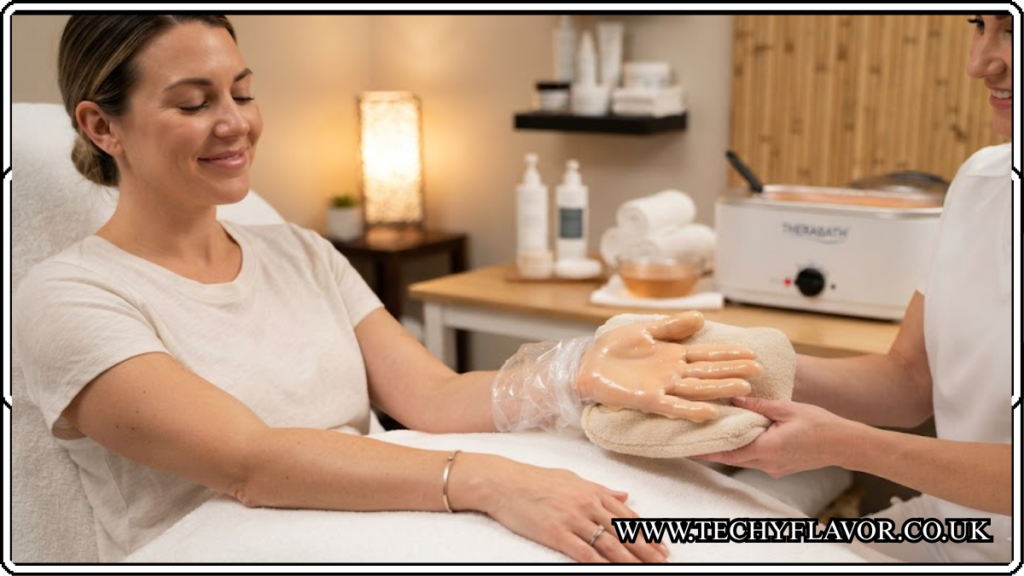
Many people associate paraffin wax with luxury spa experiences.
A typical treatment involves:
- Heating the wax safely.
- Dipping hands or feet several times.
- Wrapping with plastic and towels.
- Allowing the warmth to penetrate.
- Removing the hardened wax.
Benefits often include:
- Softer skin
- Improved hydration
- Temporary relief from joint stiffness
- Relaxed muscles
- Better circulation
Many UK beauty clinics continue offering paraffin wax treatments because clients appreciate both the comfort and cosmetic results.
Is Paraffin Wax Safe?
For normal use, paraffin wax is considered safe when handled correctly.
Safety recommendations include:
- Never overheat the wax.
- Use dedicated wax heaters.
- Keep away from open flames.
- Store in a cool, dry location.
- Supervise children around melted wax.
People with certain skin conditions or reduced sensitivity should seek medical advice before using heated paraffin treatments.
Environmental Considerations
Because paraffin wax originates from petroleum, some consumers prefer renewable alternatives such as soy, coconut, or beeswax.
That said, paraffin wax remains widely used because it is:
- Highly efficient
- Cost-effective
- Readily available
- Consistent in quality
Modern manufacturing continues improving refining processes to reduce impurities and improve environmental performance.
Consumers looking to reduce their environmental footprint may choose products that combine paraffin wax with renewable waxes.
Paraffin Wax vs Other Waxes
| Feature | Paraffin Wax | Soy Wax | Beeswax |
| Cost | Low | Medium | High |
| Fragrance Throw | Excellent | Good | Mild |
| Burn Consistency | Excellent | Very Good | Excellent |
| Renewable | No | Yes | Yes |
| Colouring | Easy | Moderate | Limited |
| Heat Retention | Excellent | Good | Good |
Each wax has strengths depending on the intended application.
How to Store Paraffin Wax
Proper storage extends product quality.
Keep it:
- Away from direct sunlight
- In sealed containers
- Free from dust
- At room temperature
- Away from strong odours
Stored correctly, paraffin wax maintains its performance for years.
Choosing the Right Paraffin Wax
Before buying, consider:
Intended Use
Different grades suit different jobs.
Melting Point
Lower melting points work well for cosmetics.
Higher melting points are better for industrial applications.
Oil Content
Lower oil content generally indicates higher purity.
Food Safety
Always purchase certified food-grade products for edible applications.
Supplier Reputation
Reliable manufacturers provide consistent quality and safety information.
Practical Tips for Using Paraffin Wax
Getting the best results is often about preparation.
Helpful tips include:
- Melt wax slowly using suitable equipment.
- Never leave melting wax unattended.
- Measure temperatures carefully.
- Use protective gloves when necessary.
- Allow wax to cool before handling finished products.
- Follow manufacturer guidance for specialist applications.
Whether you’re making candles, treating dry skin, or protecting equipment, careful handling improves both safety and results.
Conclusion
Paraffin wax continues to play an important role in modern life thanks to its versatility, affordability, and dependable performance. From beautifully scented candles and therapeutic spa treatments to industrial coatings and food preservation, its range of applications is remarkably broad.
Understanding the different grades, proper handling methods, and intended uses helps you choose the right product with confidence. While alternative waxes have grown in popularity, paraffin wax remains a trusted solution for countless household and commercial purposes because it combines practicality with consistent performance.
Frequently Asked Questions
What is paraffin wax mainly used for?
Paraffin wax is mainly used for candles, beauty treatments, food preservation, packaging, and industrial coatings. Its excellent heat retention and water resistance make it suitable for many everyday applications.
Is paraffin wax safe for skin?
Yes, paraffin wax is generally safe for skin when used correctly. Professional spa treatments use controlled temperatures to moisturise skin and provide temporary relief for stiff joints and muscles.
Can paraffin wax be used with food?
Yes, but only food-grade paraffin wax should be used with food. This specially refined version is approved for applications such as cheese coatings and preserving certain fruits.
Does paraffin wax burn cleanly?
Yes, high-quality fully refined paraffin wax burns cleanly when used in properly made candles with the correct wick. Poor-quality wax or incorrect wick selection may produce soot.
How should paraffin wax be stored?
Store paraffin wax in a cool, dry place away from sunlight and heat. Keeping it sealed and free from dust helps maintain its quality for long periods.
Read More Blog: